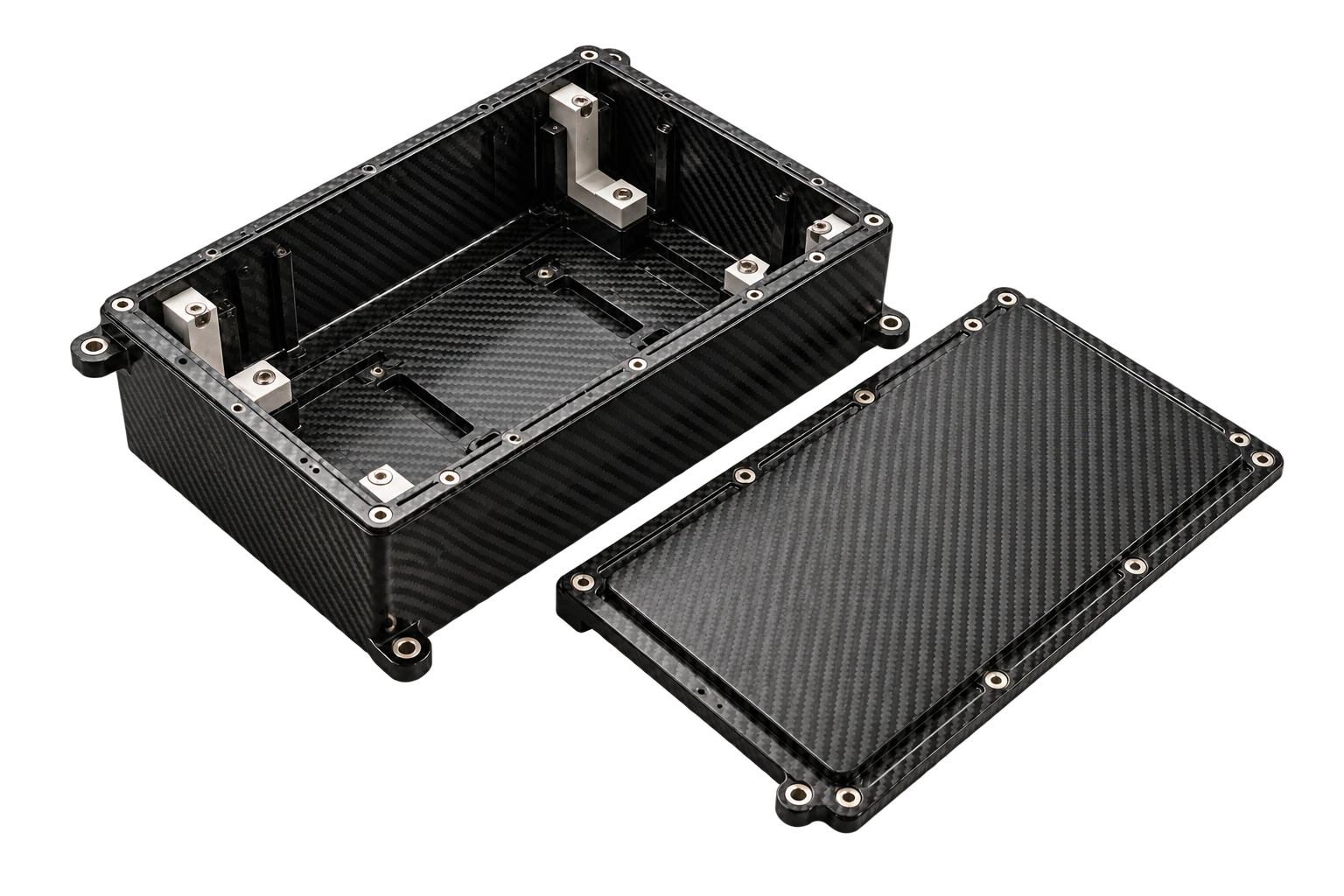
A photograph is a useful starting point, but it leaves many quotation decisions open. Two suppliers can price the same visible shape while assuming different laminates, tooling, machining or inspection. The following six steps are an editorial checklist for making those assumptions explicit before comparing proposals.
1. Share the correct drawing revision
Send the current 3D model with a matching 2D drawing where available. Identify the revision, units and critical dimensions. Mark the surfaces that locate the part in the assembly, mounting holes, inserts and mating components. A reference image can explain the appearance; it should accompany the geometry rather than replace it.
If the design is still an idea, say which dimensions are fixed and which may change. Ask for a feasibility discussion before requesting a production price against an unfinished design.
2. Describe the load and operating environment
Explain what the component must do, how it is supported and where forces enter the structure. Include known loads, stiffness or deflection targets, vibration, temperature and exposure to water or chemicals. Identify the tests your team will use to accept the sample.
Hexcel explains that fiber orientation affects composite mechanical behavior, while the resin matrix influences temperature and environmental resistance. A visible weave pattern alone therefore does not define the required structure. Give the supplier the application requirements needed to discuss the laminate.
Hexcel — Prepreg Technology: orientation and matrix selection ↗3. Separate appearance from acceptance criteria
Specify whether the visible surface should be matte or glossy, whether the weave direction matters and which areas will remain visible after assembly. Reference photographs help establish an appearance target. Also define acceptable edge quality, coating coverage and the cosmetic defects that would cause rejection.
List the dimensions that genuinely affect function. A locating hole and a hidden trimmed edge may need different acceptance criteria. Ask how critical dimensions will be measured and recorded instead of applying an unexplained tight tolerance to every surface.
4. Make tooling and assembly scope explicit
Ask whether the proposal includes a new mold, machining fixtures, inserts, adhesive assembly, hardware and finishing. Clarify tooling ownership, storage, maintenance and the cost of later design changes. Review the forming process and tooling basis before authorizing formal mold design.
Gurit highlights the role of accurate plugs and molds in achieving consistent composite parts. For your project, request an explanation of which tooling decisions remain open and which must be frozen before sampling.
Gurit — Manufacturing Solutions and Tooling ↗5. Split sampling from expected production
State the number of samples needed, the expected repeat-order quantity and the target delivery date. Explain what the first sample must demonstrate: fit, appearance, assembly or a defined structural test. Treat these as separate decisions so a low-volume development sample is not compared directly with a repeat-production unit price.
For an overseas purchase, include the destination and requested shipping terms. Ask the supplier to identify packaging, transport and inspection costs separately. MOQ, delivery timing and material availability need confirmation for the specific part and order.
6. Compare the assumptions, then the price
Use the same brief for each supplier and ask for a written list of assumptions and exclusions. Compare the proposed part, tooling, sample work and approval process before comparing totals. Record the agreed drawing revision and how a change affects cost or schedule.
A compact first inquiry can include the following:
- Current drawing or model, units and revision.
- Intended use, loads, environment and assembly interfaces.
- Surface references and critical acceptance criteria.
- Sample goal, production quantity and target date.
- Tooling, finishing, inspection and packaging scope.
- Delivery destination and commercial questions.